

Conventions in Signing and Editioning Printmaking
As a printmaking lecturer and art educator, I am often asked about editioning prints, so I thought I would provide a description of some of the main abbreviations and conventions here.
Printmaking has a long history; however a survey of contemporary printmaking will see ancient and traditional methods like woodblock and etching sitting alongside more modern methods like screen printing and linocut, together with the use of contemporary technologies such as digitally created prints, eg. solvent transfer and giclee. In printmaking each work is original, the prints are not reproductions made from an original, as they are with mechanical or digital reproductions of a painting.
What is the proper way to sign and number a print?
There are certain conventions involved in signing and numbering prints. These conventions evolved over time and were largely used for the purpose of transparency on the part of the artist and certainty on the part of the art collector.
There are certain conventions regarding how an original print is signed.
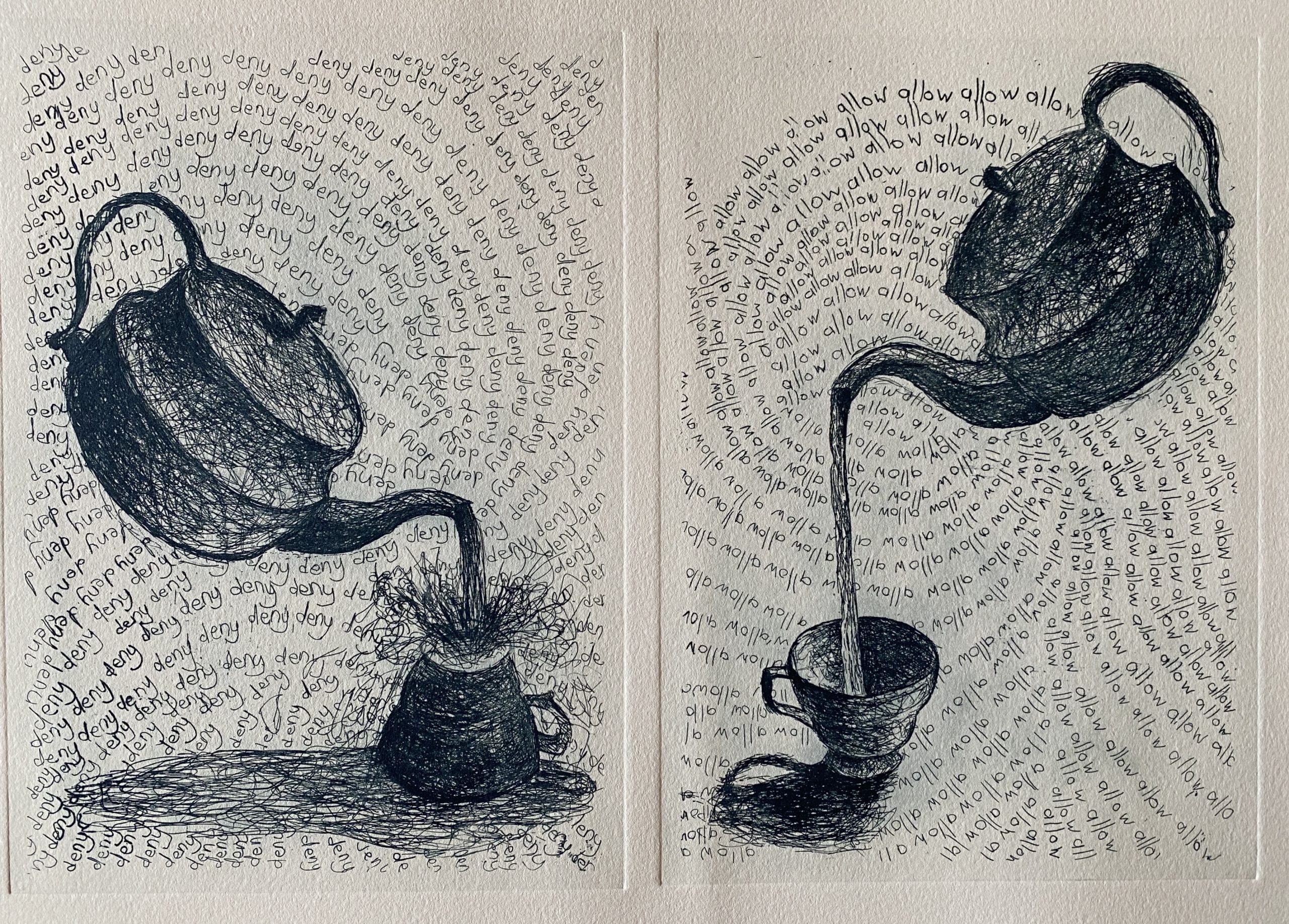
An edition is always signed and numbered in pencil. This convention started in Victorian times. The idea of using pencil instead of ink to sign a work is to guard against forgery. Unlike an ink signature, a pencil mark is difficult to reproduce by mechanical or digital reproduction. Additionally, the pencil signature is less likely to detract from the artwork.
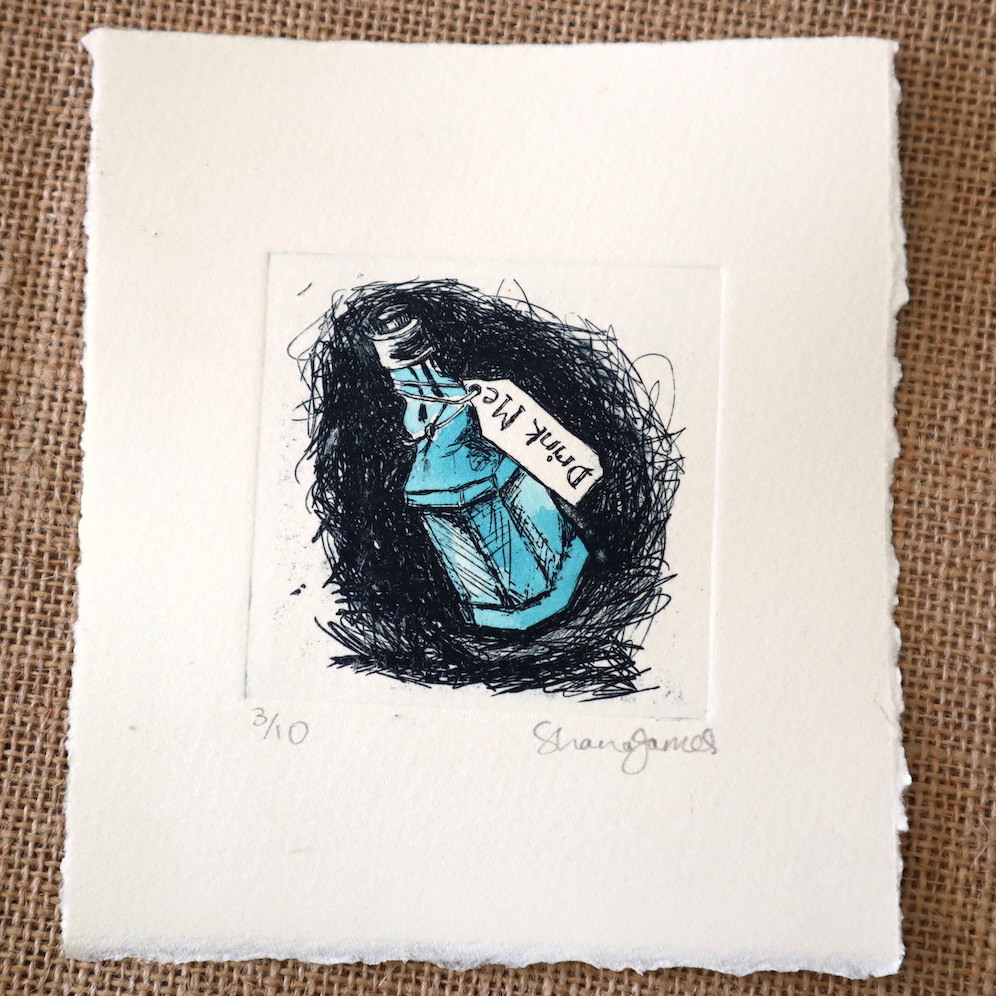
The number of the print is generally placed directly under the image on the left hand side. It is written like a fraction. 2/8 means this is the second print, out of a total of 8 prints. The artist’s signature is generally signed in pencil on the right hand side under the image. Some artists date the work or add the year on the front, others sign again and date and/or title on the back.
It is important to note that these are conventions and there are times when artists choose to print to the edge of the page. There are also times when an artist may choose to sign or number works differently as so to not detract from the image.
Abbreviations and Printmaking Terminology
A/P stands for artist’s proof. If the artist is commissioned to make a series of prints, they are able to keep a couple of artist’s proofs for personal record or use. These sometimes differ slightly from the edition, although they can be the same. This is often also used for proofs taken while in the process of making the plate, for the artist to see how the print is looking. Although it is technically more accurate to call these prints state proofs especially if the block or plate is subsequently altered by the artist.
S/P State proof, designates a working proof, ie a print made at a particular state in the process of making the plate.
U/S stands for unique state. This means that the print is a one off – unique print, it has some kind of unique feature that cannot be reproduced again also may sometimes be labelled as 1/1.
V.E. or E.V. followed by the edition number. Edition Variable or Variable edition. As many print terms have their origins in the French language E.V. is more traditional standing for the French – Edition Variée. Although English speakers often use V.E. This terminology is used either when hand-colouring a print in a way that will create individual variations or using an editioning method with a lot of variation eg selective wiping back in the intaglio process.
B.A.T. Bon a Tier French for “good to pull” This is the first print of the edition that meets the standards of the artist. This terminology is often used when the printmaker is being commissioned to make a work.
P/P Printers proof, this proof is used when the artist and the printmaker are different people. The printer is allowed a couple of prints for personal use and to test out ink paper etc. The printer will usually have an artist’s proof as a definitive guide for how the proof will look.
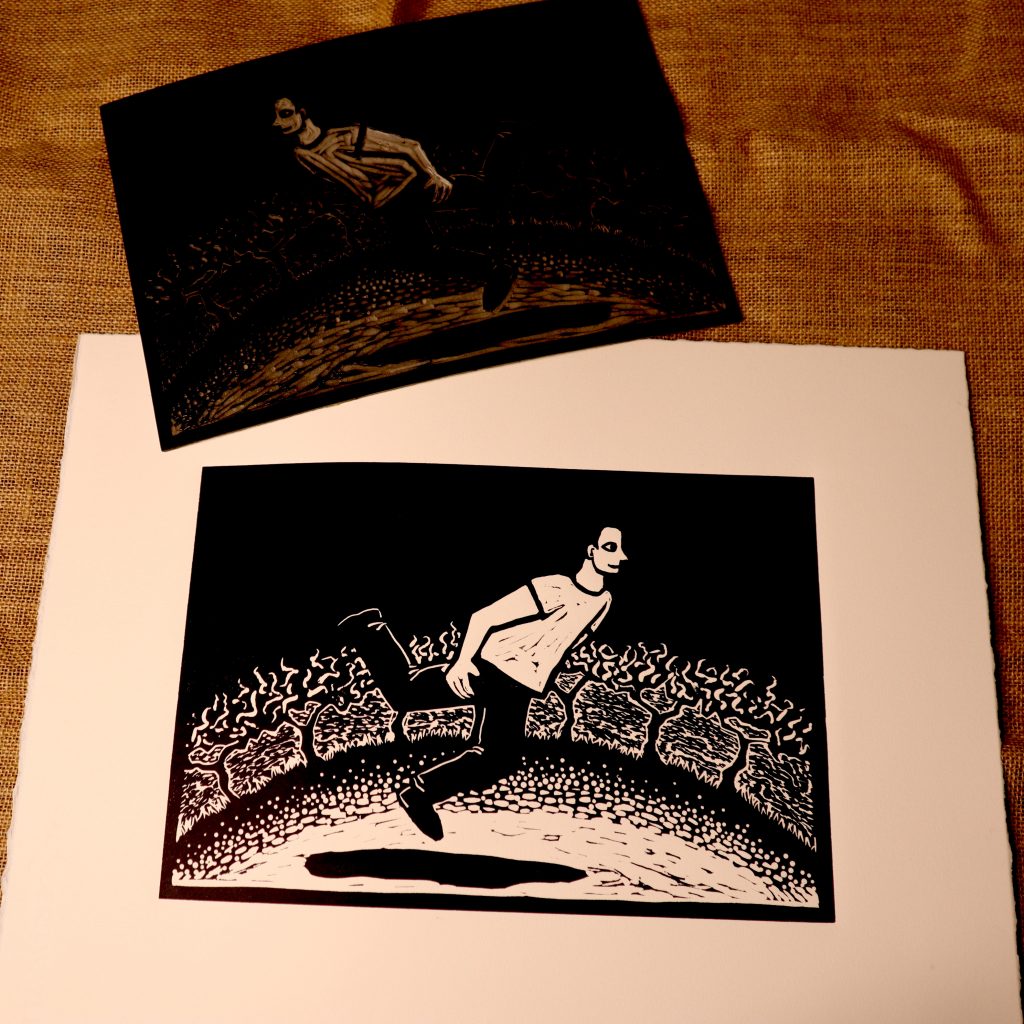
Hand Pulled or Hand Pulled by the Artists– this is often used in the description of a work being exhibited for sale, denoting that the image is hand made printmaking, to differentiate it from digital or mechanical reproduction.
All the prints I make are hand pulled see more here on my website https://shanajames.com/art-sales/